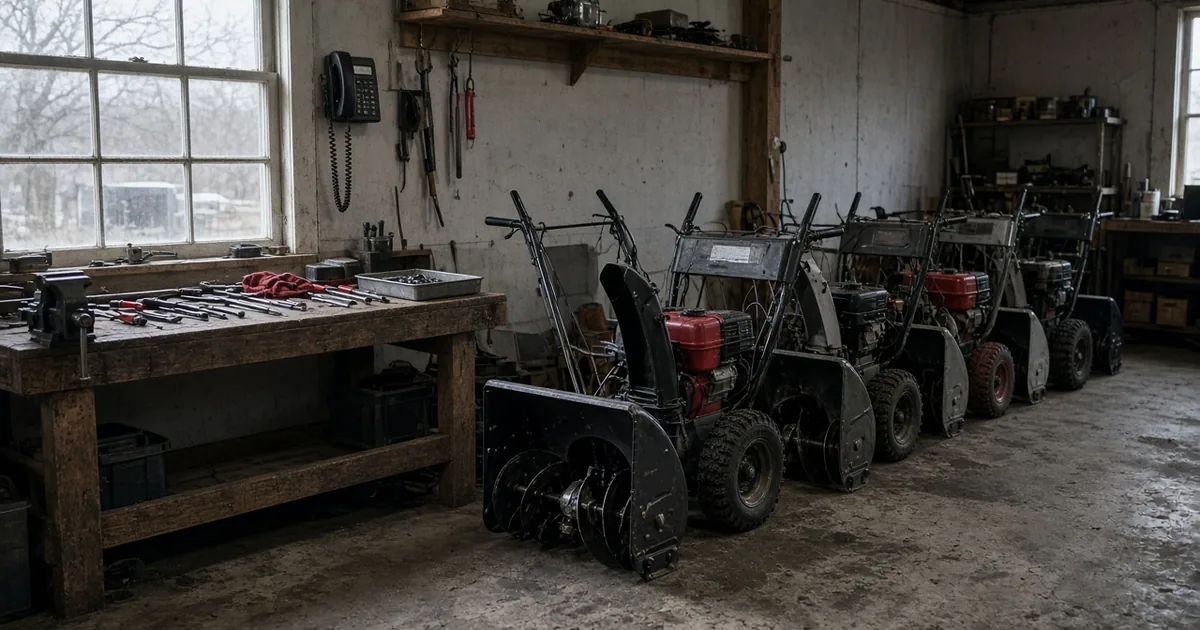
A small engine shop in Greenville gets its first real snow forecast of the year. By Tuesday morning there are eleven snowblowers lined up inside the door and the phone hasn't stopped ringing. The owner is elbow deep in a carburetor. His wife is doing invoices at the counter and grabbing calls in between. One caller wants to know if they're open Saturday. Another wants a pickup out past Six Lakes. A third guy just wants to know if they sell chainsaw chain. By noon she quits picking up and the voicemail box is full. That's the exact day an AI receptionist in Greenville, MI is built for, and it's usually the day an owner wishes he'd set one up in October.
I'm Kevin Nash. I live in Fenwick, a short drive from Greenville, and I run AutomAI. I build phone answering for small shops. I also work nights, so I know the feeling of waking up to four missed calls and no clue which one mattered.
When these setups go sideways, it's usually for a boring reason. Nobody taught the thing where it lives. This post is about that part.
Greenville runs on small shops
Greenville is a small town. The U.S. Census Bureau estimates the city had 9,256 people as of July 1, 2025. Zoom out to the whole state and the SBA Office of Advocacy counts 983,079 small businesses in Michigan. That's 99.6 percent of all the businesses here.
So in a town this size, the person answering your phone is usually you. Or your spouse. Or the kid at the counter who also sweeps the floor and runs parts. Nobody is sitting at a desk waiting for it to ring.
That works fine on a slow Wednesday. It falls apart the first cold night of the year, or on a Saturday in May when every mower in the county refuses to start at once.
What an AI receptionist in Greenville, MI needs to know first
A generic phone setup can be polite all day and still be useless to you. It doesn't know Greenville from Grand Rapids. It can't tell whether Lakeview is in your area. It'll happily book a job in Ionia when you'd never drive that far for a tune-up.
Before an AI receptionist answers a single call for a Greenville shop, I want it to know your map. Here's what goes into that:
- The towns you'll drive to and the ones you won't
- The way folks around here give directions, like "out by the lake" or "the old farmhouse past the school"
- Your real hours, including the week you close up for deer camp
- What you do and what you send to somebody else
Then it asks for the address early in the call. If the caller is outside your area, it tells them kindly and still takes a message, in case you want to make an exception for a good customer. You don't lose the caller. You also don't promise a trip you weren't going to make.
Your callers would rather talk than type
Census QuickFacts lists 22.0% of Greenville residents as 65 or older. Plenty of those folks would rather call than fill out a web form. They want a voice on the other end. They want to tell you the whole story about the furnace and the noise it made at three in the morning.
That changes how I build the call:
- It talks at a normal pace and doesn't rush anybody.
- It reads phone numbers and addresses back to make sure it heard them right.
- It lets people finish their story first, then asks its questions.
- When someone asks for a real person, it transfers them or takes a message for you, no back-and-forth.
A caller who feels heard will wait for your callback. A caller who feels processed will call the next shop.
Build it for your busiest week
Every shop around here has a rush. Furnace guys get it the first cold night. Roofers get it after a windstorm. Small engine shops get it twice a year, once for mowers and once for snowblowers. The rush is when your phone rings the most and you have the least time to touch it.
Everybody wants more calls. Nobody wants to answer them on the busiest Saturday of the year.
So when we write your call flow, we write it for that week. What should a caller hear when you're booked out ten days? Do you want a waiting list? Should it ask whether the job can wait, and flag the ones that can't? A furnace that won't light in January is a very different call from a mower that needs a spring tune-up.
You set the rules. It follows them on the first call of the day and the ninetieth.
Lines it should never cross
Some things are worth deciding before it ever picks up.
- It never guesses a price. If you haven't approved an answer, it tells the caller you'll follow up on that.
- It never promises a time you didn't give it.
- It never pretends to be you or anybody on your crew.
- It never argues with an upset caller. It takes down the details and flags the call so you see it first.
After every call you get a short summary with who called, how to reach them and what they need. You read it when you come up for air, and you call back already knowing what the job is.
Why it helps to have it built close to home
When I set one up for a shop around Greenville, I already know where Belding is and how far Stanton feels in February. I know "up north" starts at a different spot depending on who you ask. That saves us time when we write your call flow, because I'm not learning the area on your clock.
It also means the guy who built it is close by. After it goes live, I listen to how the calls are going and adjust the script. Add a service, drop a town, change your winter hours, and you tell me. I make the change.
One rule I use on every setup is to cut a step before you automate it. Before we build anything, we look at the calls you get today and toss the ones that never needed you. The lumber yard calling to say your order is in can go straight to a message.
Where it fits in a Greenville shop
It covers the calls nobody can get to. After hours. During the rush. While you're flat on your back under a truck. You still make every decision that matters. It just makes sure you hear about the call.
You can read more about how the call flow works on my AI receptionist page.
Hear it for yourself
Call 989-467-3899 and ask for a demo. That's the AI receptionist I use to show people how this sounds. Ask it something tricky. Talk over it. Pretend you're calling from out past Six Lakes about a snowblower that won't start. You'll know in about a minute whether a caller of yours would put up with it.
A setup for your own shop gets built from your towns, your hours and your rules. If you want to talk through what your phone looks like on a bad week, send me a note and I'll get back to you.