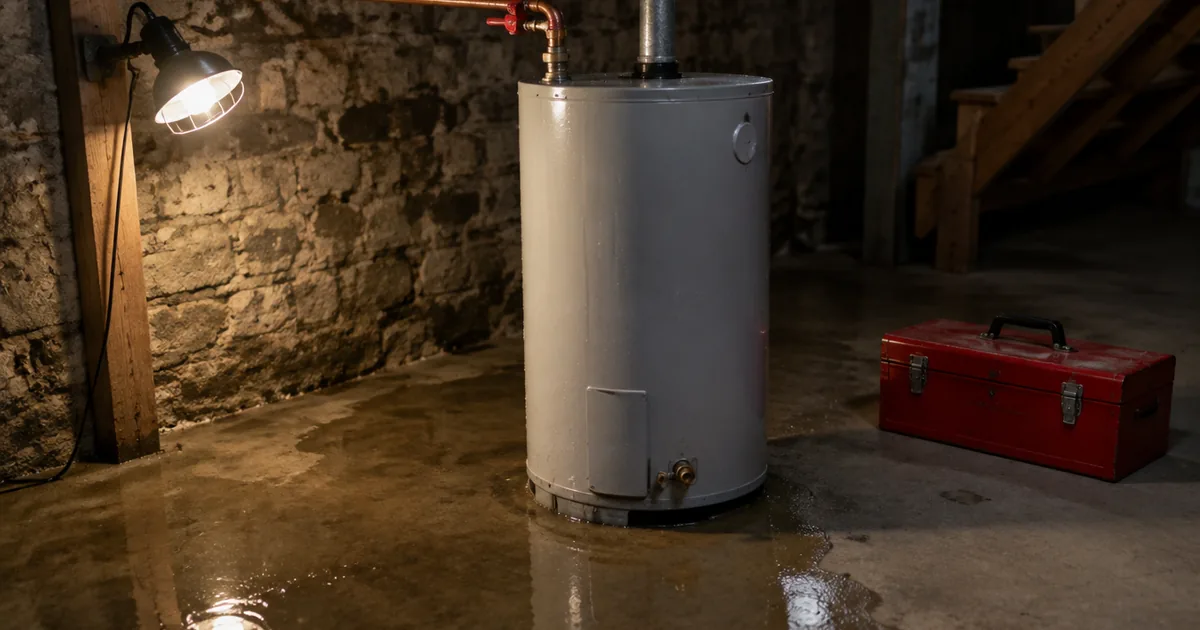
It's 10:40 on a Sunday night in Sheridan. A homeowner goes down to the basement for a load of laundry and steps into an inch of water. The water heater is leaking from the bottom. She calls the plumbing company whose truck she sees around town. An AI receptionist for that plumbing company picks up on the second ring.
What happens next comes down to the rules the owner wrote before that phone ever rang.
In one shop, the receptionist asks if water is still coming out. It asks if she can reach the cold water valve on top of the heater. It gets the address, tells her the on-call plumber will call her back, and sends that plumber a text with the details. In another shop, it cheerfully books her for Thursday at 9. Both shops could be running an identical setup. The owner's rules made the difference.
I'm Kevin Nash. I run AutomAI Innovations out of Fenwick, and I work nights as a corrections sergeant. I set up call answering for service businesses across mid-Michigan. This post covers the part that's easy to skip, which is deciding what the receptionist should do before it takes a single call.
Plumbing calls don't keep office hours
The Bureau of Labor Statistics says it straight. Plumbers are often on call for emergencies, so evening and weekend work is common. Anyone who has run a plumbing truck already knows that. The calls come in after supper, on Saturdays and the night before Thanksgiving.
The same BLS page projects about 42,000 openings for plumbers, pipefitters and steamfitters each year, on average, over the decade. Many of those openings come from people retiring or leaving the trade. Good plumbers are hard to replace. Your best one belongs under a sink, and the phone at the counter can be covered another way.
So the phone needs someone on it. If that someone is a piece of software, it needs a clear set of orders.
Most leak calls can wait until morning
The EPA tracks household leaks through its WaterSense program. Its Fix a Leak Week page says nine percent of homes have leaks that waste 50 gallons or more per day. The same page says the average household's leaks can account for more than 9,300 gallons of water wasted every year.
The EPA names worn toilet flappers, dripping faucets and other leaking valves as the common ones. They are real work, and they are worth a call back. Very few of them are worth waking your on-call plumber at 2 a.m.
That's the first job of your rules. They tell the receptionist which calls are a burst pipe and which ones are a slow drip. A drip goes on tomorrow's list. A basement filling with water goes to a person now.
What to decide before an AI receptionist for a plumbing company goes live
In my day job, every post comes with written orders. Nobody stands a post on guesswork, and your phone shouldn't run on it either. Sit down with a notepad for an hour and write the answers to these questions in plain words. That becomes the receptionist's playbook.
Which calls wake someone up?
Pick the short list. Water running that the caller can't shut off. Sewage coming back up into the house. No water at all. Name the plumber who gets those calls, and decide if it texts, calls, or both.
What does it ask on every call?
Name, address, best callback number and what's going on. Then the questions you'd ask yourself. Is water still running? Is it one fixture or the whole house? Is the home on city water or a well?
What does it never say?
Plenty of plumbers don't want a price quoted over the phone before anyone has looked at the job. Write that down. Do the same for arrival times. "The plumber will call you back within the hour" is a promise. Only let it make that promise if your on-call plumber can keep it.
Which towns do you cover?
List them. If you go to Stanton and Carson City but not Ionia, say so. A caller outside your area should hear that up front, politely, so she can find someone else fast.
What work do you turn down?
Some shops don't touch new construction, irrigation or commercial jobs. If you don't do it, the receptionist should say so and end the call kindly.
What's the gas line answer?
If a caller says she smells gas, the receptionist should tell her to leave the house and call 911 or the gas company from outside. Write that rule out word for word so it's said the same way every time.
Wells and septic change the call
A lot of homes around here sit on a well and a septic tank. That matters on the phone.
"I have no water" means one thing in town. It might be a main break on the street, and the city is already on it. Out on a gravel road, it might be the well pump or the pressure switch. If your shop does pumps, the receptionist should treat it as urgent. If you don't, it should tell the caller so and save her an hour of waiting.
Septic calls are the same. A slow drain on a septic system might be a clog you can clear. It might be a full tank that needs a pumping company. Decide which of those you take, and tell the receptionist.
Cut steps before you hand them off
Before you automate anything, look for the steps you can drop. Say you never book drain cleaning after 6 p.m. anyway. Then the receptionist shouldn't offer evening slots for it. Maybe every water heater call needs the tank's age before you can quote a replacement. Have it ask once, on the first call, so you never have to call back for it.
Every step you cut is one less thing that can go wrong at midnight.
Read the first 20 call summaries yourself
When it goes live, don't walk away. Every call should end with a short summary sent to you. For the first two weeks, read every one.
You're looking for three things. Calls it treated as urgent that weren't. Calls it put off that should have gone to your on-call plumber. Questions callers asked that your rules never covered.
Each time you find one, fix the rule that night. Two weeks of that and the playbook starts to fit your shop. When a call goes sideways, look first for a rule nobody wrote. Adding one takes a few minutes.
Where this fits in a small plumbing shop
If you have a sharp person at the desk during the day, keep them. The receptionist covers lunch, evenings, weekends and the hours when that person is already on another call.
It also helps the one-truck shop where the owner is the plumber, the estimator and the dispatcher. You can't answer with your arms inside a crawl space. You can read a text when you climb out.
Hear it for yourself
Call our demo line at 989-467-3899. Tell it your water heater is leaking in the basement and listen to what it asks you. Then look at how our AI receptionist for Michigan businesses gets set up. If you want help writing the rules for your shop, send me a note and tell me how your calls come in today.
Sources
- U.S. Bureau of Labor Statistics, Occupational Outlook Handbook, "Plumbers, Pipefitters, and Steamfitters." https://www.bls.gov/ooh/construction-and-extraction/plumbers-pipefitters-and-steamfitters.htm
- U.S. Environmental Protection Agency, WaterSense, "Fix a Leak Week." https://www.epa.gov/watersense/fix-leak-week